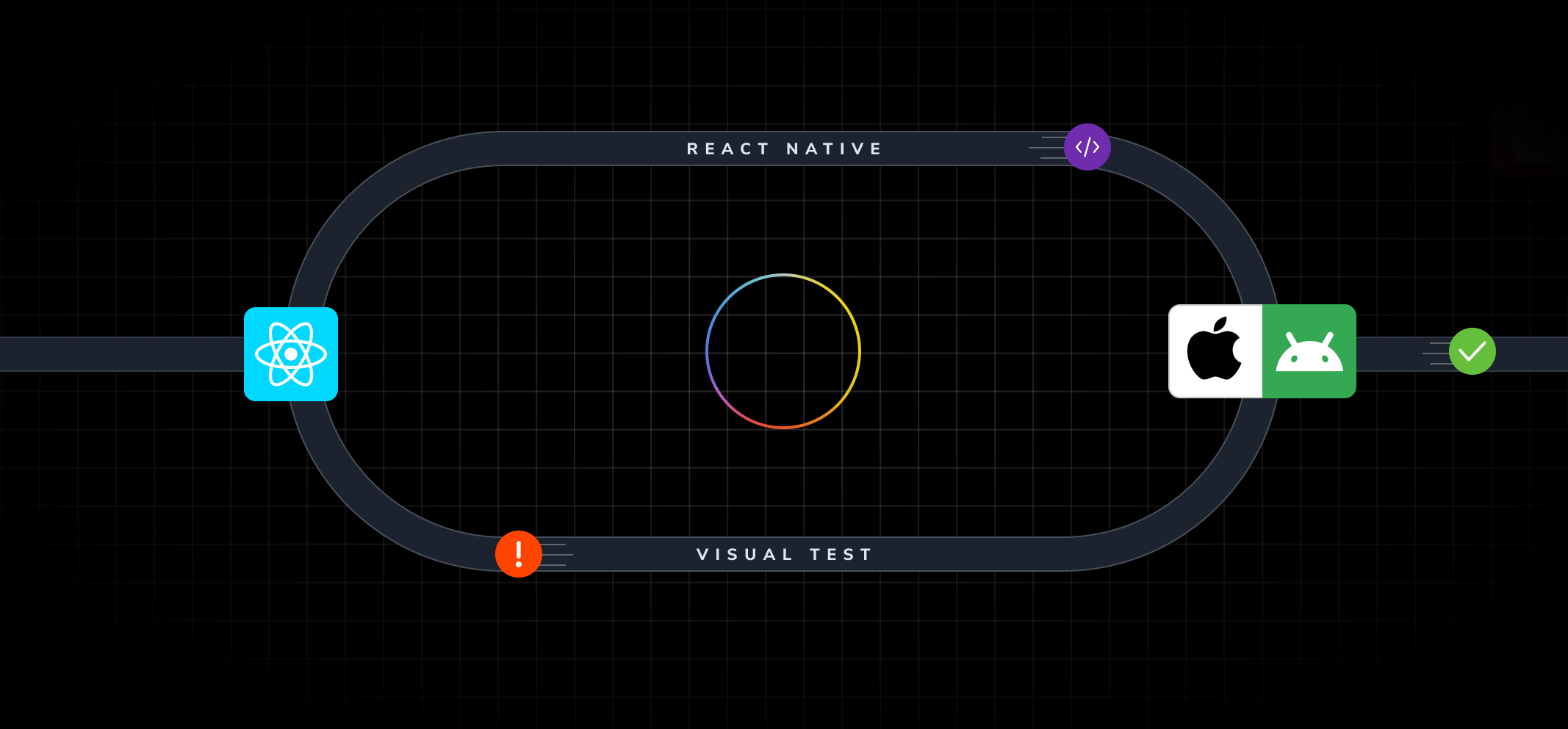
React Native visual testing sneak peek
Test on real iOS and Android simulators, fast and flake-free.

Native app visual testing has always been cumbersome. Tools like Detox and React Native Owl can take snapshots, but they don't include collaborative diffing workflows. So you end up cobbling together multiple tools just to get a basic review process.
On top of that, you're on the hook for maintaining a stable CI environment for snapshots: updating SDKs, wrangling simulator quirks, and diagnosing flake.
We’re making visual testing native apps easy and cost-effective. I’m excited to share a sneak peek of Chromatic for iOS and Android.
- 📱 Native: Native iOS & Android simulators
- 🏎️ Fast: Tests run in parallel by default
- 📷 Zero flake: Battle-tested stabilization algorithm
- 📙 Unified test suites: Powered by React Native for Storybook
- 🔍 Full review workflow: diff checker, baseline tracking & PR checks
Why we built it
DIY visual testing is brittle and expensive
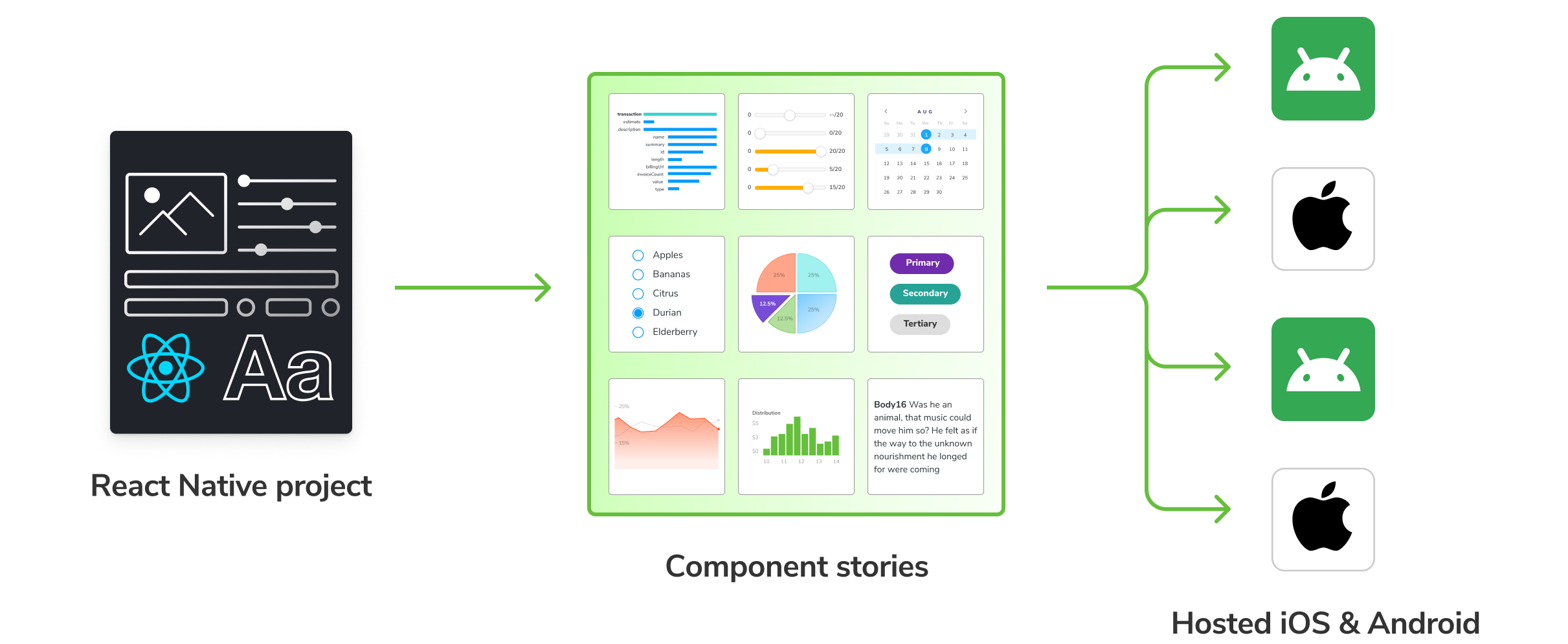
Testing native UI means running real simulators and emulators. Plus managing the SDKs, toolchains, and hosted macOS and Linux machines that go with them.
Chromatic handles snapshot infrastructure for you. It runs the iOS Simulator on hosted macOS and the Android Emulator on hosted Linux, so you capture exactly what your users see.
With most setups, snapshots and baselines are scattered across CI runs and branches, with no clear source of truth. You end up stitching together a diffing tool, a review workflow, and PR integration yourself.
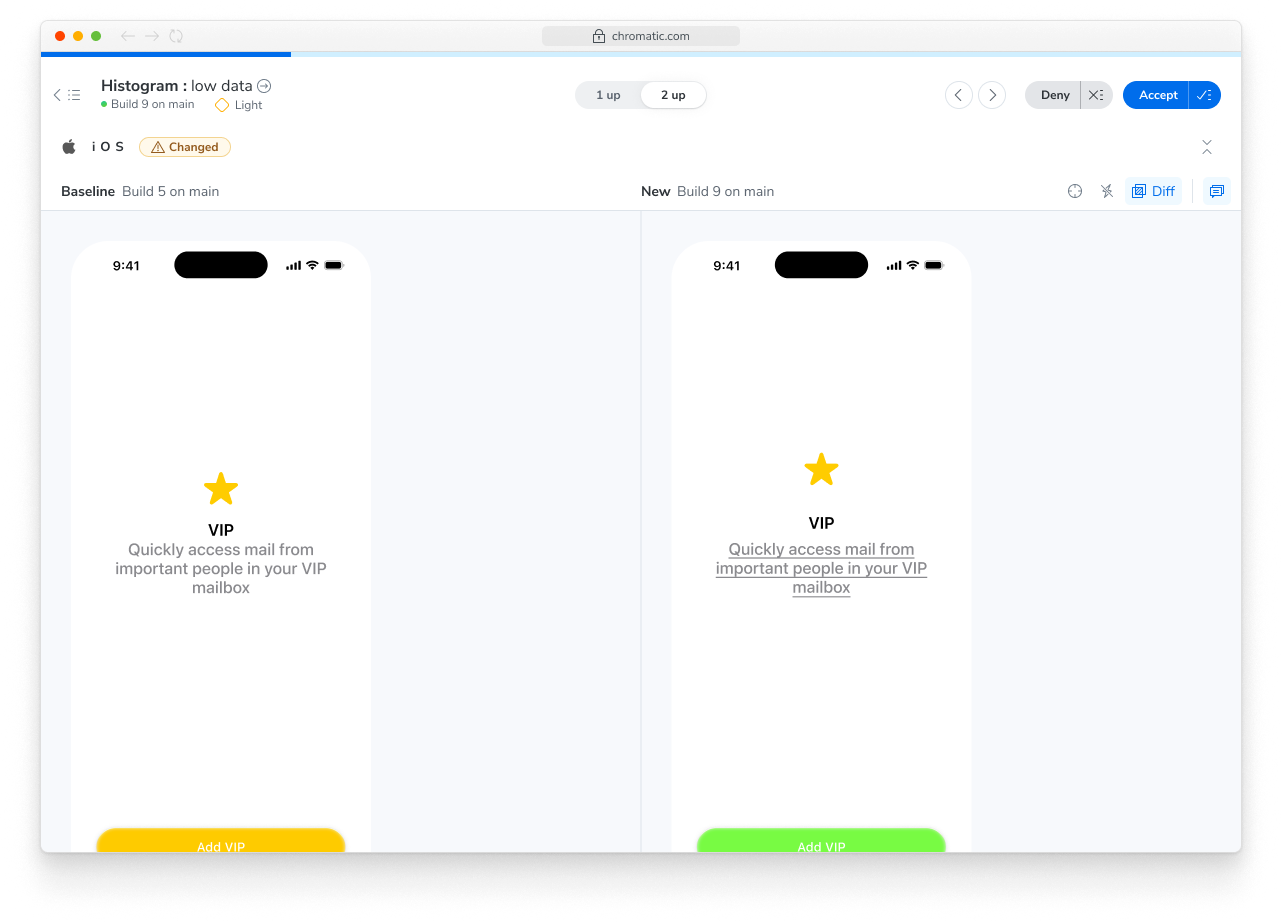
Chromatic unifies the review workflow. Baselines are tracked across branches and PRs are blocked on unexpected changes. The Chromatic UI gives your team one place to examine visual changes (using the Diff Inspector), accept, reject, and collaborate.
Stability at scale is harder than it looks
Flaky visual tests are worse than no tests. Teams start ignoring failures, regressions slip through, and you're back to manual QA.
Chromatic eliminates flake in two ways:
Managed environments: No SDK drift or simulator quirks creep in over time. Chromatic manages the snapshot environment for you, and when it upgrades its infrastructure, it automatically migrates your baselines to preserve fidelity and keep your team moving.
SteadySnap: SteadySnap stabilizes rendering by waiting for the UI to settle, then uses burst capture to deliver consistent results every time.
Waiting slows your team down
With a single CI runner, tests queue up and wait times stack as you add more tests, slowing down the whole team. There are only so many CI workers you can spin up without ballooning cost.
Chromatic parallelizes test runs automatically with no extra configuration or cost required. It spins up as many machines as needed to deliver results in the least time possible.
You've already written your tests
Maintaining a separate test suite just for visual testing is extra work nobody can afford. With React Native Storybook, if you've written stories for your components, you've already written your tests. The key difference from web-based UIs: these stories render on actual native simulators and emulators.
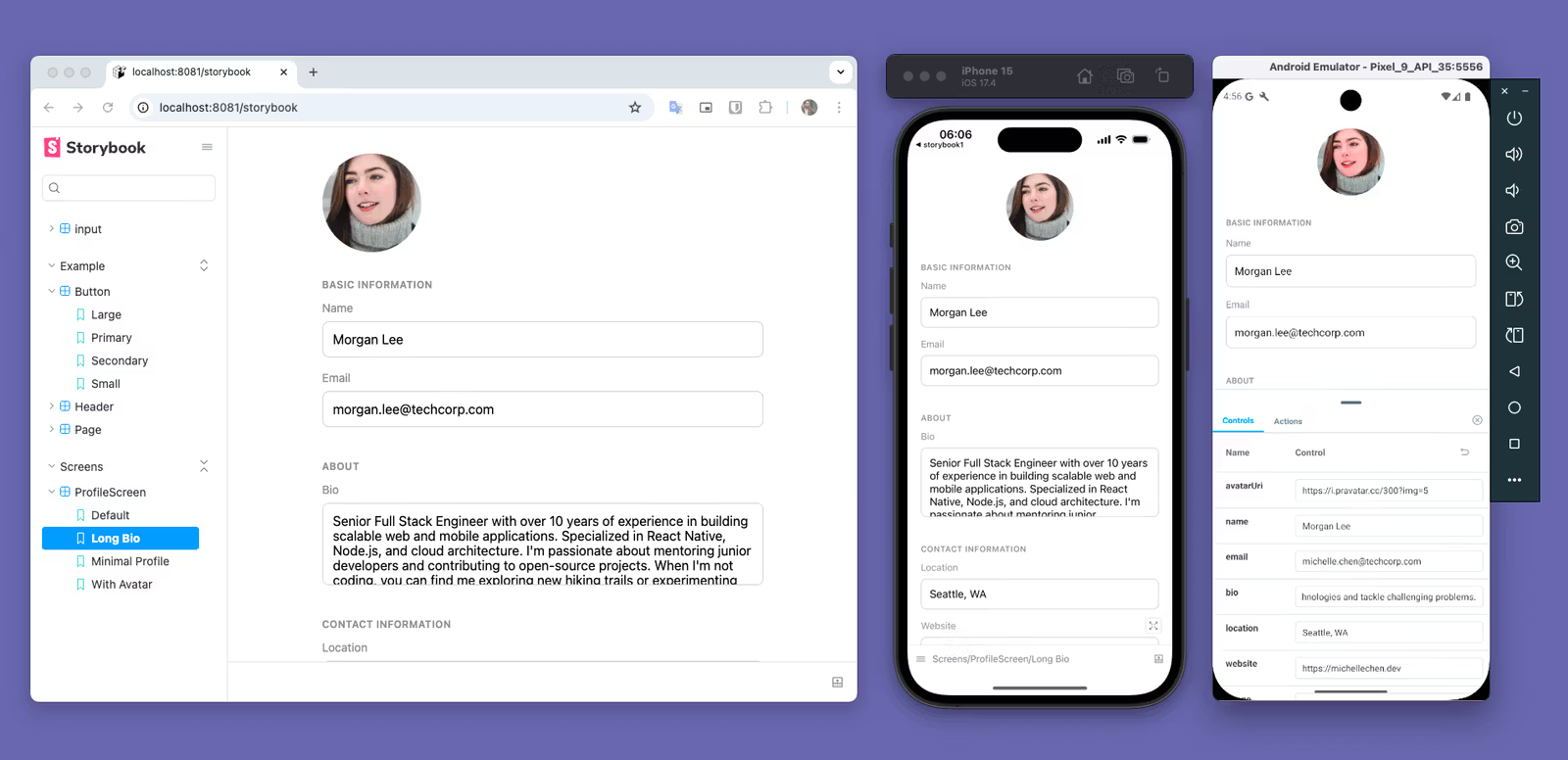
React Native Storybook renders native UI on iOS simulator, Android emulator or actual devices
Agentic coding increases regressions
AI coding agents are shipping UI changes faster than teams can manually review them. What used to be a steady stream of PRs is becoming a flood. More UI changes means more to review, and more chances for regressions to slip through unnoticed.
Manual QA doesn't scale to this. You need visual testing that's fast enough to run on every PR, stable enough to trust, and collaborative enough that the whole team can weigh in on what changed.
Get early access
Let your team focus on shipping features, not maintaining the tools that test them. Sign up below for early access to React Native visual testing for iOS and Android.
Sign up for Early AccessEarly access users get hands-on support from our team. Your feedback will shape the feature before general availability. Not using React Native for Storybook yet? Use our agent skill to get set up.